


As a supplier of Industrial Park Models, I've witnessed firsthand the pivotal role these models play in facilitating communication between enterprises and the government. In this blog post, I'll delve into how industrial park models manage this crucial communication and why they are indispensable in the modern business and governance landscape.
Visualization: Bridging the Gap in Understanding
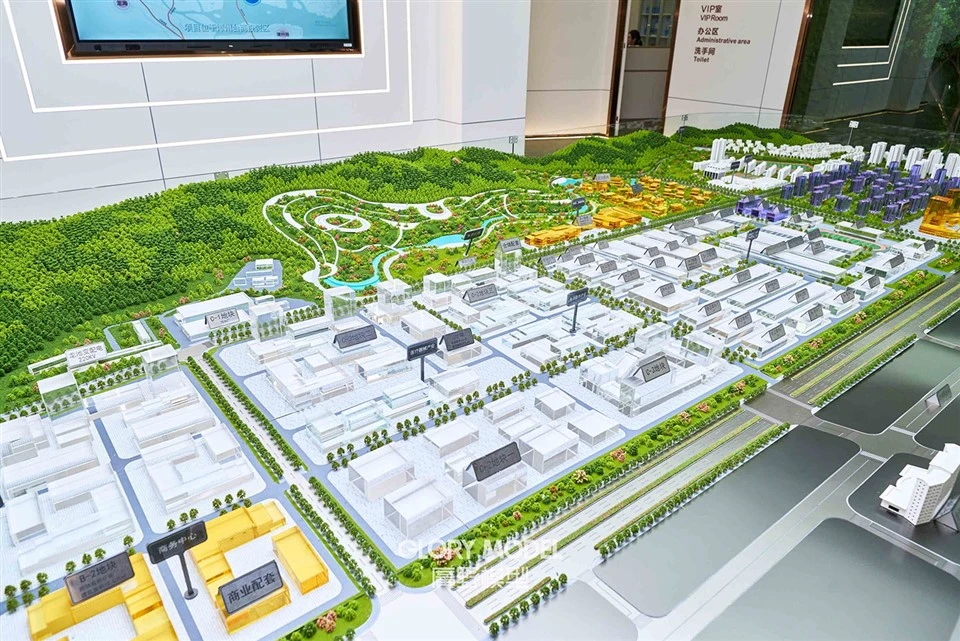
One of the primary ways industrial park models contribute to communication is through visualization. Enterprises often have grand plans for their operations within an industrial park, and the government has specific regulations and development goals. However, these concepts can be abstract and difficult to convey through words alone. Industrial Park Models [/architectural-models/industrial-park-models.html] provide a tangible representation of the proposed industrial park, allowing both parties to see the layout, infrastructure, and potential development areas at a glance.
For example, an enterprise may have innovative ideas for a new manufacturing facility within the industrial park. By presenting a detailed industrial park model, they can show the government how their facility will integrate with the existing infrastructure, such as transportation networks and utility systems. This visual representation helps the government understand the enterprise's vision and assess its feasibility, leading to more informed decision - making.
Strategic Planning and Alignment
Industrial park models also assist in strategic planning and alignment between enterprises and the government. The government usually has long - term development plans for the industrial park, aiming to attract specific industries, promote economic growth, and ensure environmental sustainability. Enterprises, on the other hand, need to align their business strategies with these government goals to secure support and resources.
A well - designed industrial park model can illustrate how different enterprises can coexist and complement each other within the park. It can show the distribution of different types of industries, such as high - tech, manufacturing, and logistics, and how they interact with each other. This helps the government to plan the allocation of land, infrastructure, and resources more effectively. At the same time, enterprises can use the model to identify potential partners and synergies, and adjust their business strategies accordingly.
Regulatory Compliance and Transparency
In the process of communication between enterprises and the government, regulatory compliance is a critical issue. The government has a set of regulations and standards regarding land use, environmental protection, and safety in the industrial park. Industrial park models can be used to demonstrate how an enterprise's plans comply with these regulations.
For instance, the model can show the location of pollution - control facilities, fire - safety measures, and waste - disposal areas. This transparency helps the government to monitor and enforce compliance more easily. Enterprises can also use the model to proactively address any potential regulatory concerns, which can speed up the approval process and build trust with the government.
Facilitating Public Participation
Industrial park development often has an impact on the surrounding community, and public participation is an important part of the communication process. Industrial park models can be used in public hearings and consultations to help the public understand the proposed development.
The model provides a clear picture of how the industrial park will look and function, which can reduce public concerns and increase acceptance. Enterprises can use this opportunity to engage with the public, listen to their feedback, and make necessary adjustments to their plans. The government can also use the model to communicate its development goals and policies to the public, promoting a more inclusive and democratic decision - making process.

Case Studies: Real - World Examples
Let's take a look at some real - world examples of how industrial park models have managed communication between enterprises and the government.
In a large - scale high - tech industrial park project, an enterprise wanted to build a state - of - the - art research and development center. The enterprise presented a detailed industrial park model to the government, which showed the center's location, its connection to the existing transportation network, and its environmental - friendly design. The government was able to quickly assess the project's feasibility and its alignment with the park's development goals. As a result, the project was approved in a relatively short time, and the enterprise was able to start construction on schedule.
In another case, a logistics enterprise was planning to expand its operations in an industrial park. The government was concerned about the potential traffic congestion and environmental impact. The enterprise used an industrial park model to show how it would implement traffic - management measures and reduce emissions. The model also demonstrated how the expansion would contribute to the overall economic development of the park. After in - depth discussions based on the model, the government approved the expansion, and the enterprise was able to grow its business.
The Role of Different Types of Models
In addition to traditional industrial park models, other types of models can also play a role in communication. Wooden Architectural Models [/architectural-models/wooden-architectural-models.html] can add a touch of authenticity and warmth to the presentation. They are often used to showcase the architectural design of the industrial park's buildings, giving a more human - scale perspective.
Theme Park Models [/architectural-models/theme-park-models.html] can be relevant if the industrial park has a theme - based development, such as a science and technology theme or a cultural heritage theme. These models can help to create a more immersive and engaging experience for both enterprises and the government, making the communication process more effective.
Conclusion
In conclusion, industrial park models are powerful tools for managing communication between enterprises and the government. They facilitate visualization, strategic planning, regulatory compliance, and public participation. By using these models, both parties can better understand each other's needs and goals, leading to more efficient decision - making and successful industrial park development.
If you are an enterprise looking to develop in an industrial park or a government agency responsible for industrial park planning, I encourage you to consider using high - quality industrial park models. They can significantly enhance the communication process and increase the chances of a successful project. Whether you need a traditional industrial park model, a wooden architectural model, or a theme park model, I'm here to provide you with the best solutions. Feel free to reach out to me to discuss your specific requirements and start the procurement process.
References
- "Industrial Park Development: Principles and Practices" by John Smith
- "The Role of Visualization in Urban Planning" by Jane Doe
- "Effective Communication in Public - Private Partnerships" by Robert Johnson


